
Raising Community-Ready Kids: How to Build Confidence and Belonging From Birth Through Early Adulthood
A neurodiversity-affirming guide for parents, caregivers, and educators in Lansing, Grand Rapids, Muskegon, and Grand Haven
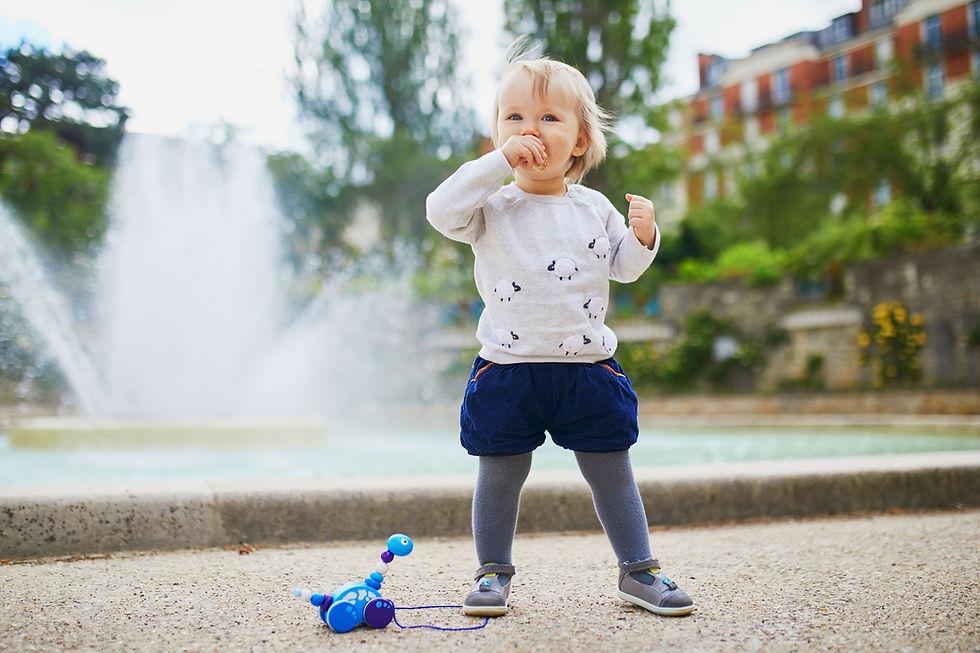
If you've ever watched your toddler point at a dog and look back at you to make sure you saw it too, congratulations! You just witnessed the first building block of community membership. If you've ever coached your teenager through ordering their own coffee, you were doing the same work, just further down the road.
Here's a secret I share with every family I work with: you don't need a special credential to teach your child community skills. You already have the most important one — you're their parent, and you were their first teacher the moment they were born.
As a doctor of education, Board Certified Behavior Analyst, former preschool teacher, and someone deeply influenced by the Reggio Emilia philosophy, I've spent my career at the intersection of child development, applied behavior analysis, and real-world community life. And if there's one thing I want every parent, grandparent, teacher, pediatrician, and speech-language pathologist reading this to walk away with, it's this:
Community skills aren't a "someday" goal. They start at birth, and they should be fun.
Let's talk about what that actually looks like — and how you can start today, whether your child is six months old or sixteen years old.
What Do We Mean by "Community Skills," Anyway?

Community skills are the everyday competencies that help a person move through the world with confidence: noticing a bathroom sign, waiting for a walk signal, ordering a smoothie, introducing themselves at a birthday party, asking a store employee for help, or figuring out how much change they're owed. They're not "extra" skills tacked onto academics — they are the curriculum of life, and they matter for every child, including autistic children, children with ADHD, children with Down syndrome, and children with other developmental differences.
At our practice, we support kids and teens through social groups in the Lansing, Michigan area, virtual parent groups, and in-home ABA therapy across Lansing, Grand Rapids, Muskegon, and Grand Haven — and community skill-building shows up in every single one of these spaces. Whether we're role-playing how to order at a drive-thru or practicing how to ask a friend to hang out, the goal is always the same: help each child become a confident, capable, valued member of their community, on their own terms.
That last part matters. This isn't about making anyone look "normal" or masking who they are. It's about giving every child — neurodivergent or neurotypical — genuine tools and real opportunities to connect, participate, and belong.
Parents Are the First (and Best) Teachers
Reggio Emilia educators talk about the "environment as the third teacher" — but the first teacher is always the parent. Long before a child sets foot in a classroom or a therapy session, they're learning from you: how to greet a neighbor, how to wait in line, how to notice the world around them.
This is genuinely good news. It means you don't need a curriculum binder or a therapy degree to start building your child's community skills. You need curiosity, a little intentionality, and a willingness to narrate the world out loud. Here's the fun part — this work doesn't feel like "work" when you frame it right. It's a trip to the grocery store. It's a walk to the mailbox. It's ordering pizza on a Friday night.
Let's break down what this looks like developmentally, from infancy through early adulthood.
Birth to Age 3: Noticing the World Together

Community skill-building in infancy and toddlerhood is all about joint attention — the ability to share focus on something with another person. This is the root skill underneath almost everything else on this list.
Ways to build it into everyday life:
Point and narrate. "Look, a firetruck!" Point, pause, and see if your baby looks where you're pointing — this back-and-forth is the skill.
Take walks with a purpose. Rather than pushing the stroller on autopilot, stop and notice: "That sign is red — it means stop." You're building early symbol recognition long before your child can read.
Practice walking with, not running ahead. Holding hands or walking beside a caregiver (rather than bolting ahead or needing to be called back) is a safety skill and a community skill. Narrate it: "We walk together in parking lots so we stay safe."
Visit new places often. New environments — a different park, a new grocery store, a friend's house — build flexibility and reduce the anxiety that unfamiliar places can bring later on.
None of this requires flashcards. It requires narration — talking through what you're doing and why, out loud, consistently.
Ages 3 to 5: Building the Toolkit of Independence

Preschool-age children are ready to start practicing real transactions with the world, even if they need a lot of support.
Try:
Sign and symbol recognition. Point out bathroom signs, exit signs, and crosswalk signals. Make it a game: "Can you find the sign that means 'bathroom' before I do?"
Crossing streets and navigating parking lots. Narrate every step: "We stop at the curb. We look both ways. We hold hands until we're across." Repetition here builds automaticity that keeps kids safe for life.
Introducing the concept of money. Let your child hand cash to the cashier, even if you've already counted it. Watching money change hands demystifies transactions long before they understand denominations.
Practicing bathroom independence. Using public toilets, flushing, washing hands, and — this one trips up a lot of kids — tolerating the sound of automatic hand dryers. If a hand dryer is a sensory challenge for your child, that's valid; practice with a paper towel option nearby and build tolerance gradually, never by force.
Following a visual schedule. Predictability builds confidence. A simple picture schedule for outings ("first the store, then the park") helps kids anticipate what's next and reduces anxiety in new settings.
This is also the age where modeling becomes your most powerful tool. Kids learn to introduce themselves by watching you do it first: "Hi, I'm Sarah, and this is my son Ben." You don't need to force your child to perform the greeting — let them absorb the script by watching it happen naturally, over and over.
Ages 5 to 8: Practicing Real Conversations

Early elementary years are prime time for expanding language use in community settings. This is where social groups become especially valuable, because kids need practice with actual peers, not just adults.
Focus areas:
Ordering food and drinks. Let your child order their own item at a restaurant or coffee shop, even if it's just "chocolate milk, please." This builds initiation, waiting, and receptive language skills all at once.
Two-way conversations. Practice the rhythm of conversation — asking a question, listening to the answer, and adding a follow-up comment. This can be practiced at home before it's tried in the world.
Asking for directions or help. Rehearse simple scripts: "Excuse me, where is the bathroom?" or "Can you help me find the cereal aisle?" Practicing this at home, then trying it in a low-stakes setting like a familiar store, builds real confidence.
Setting up playdates. Teach kids to ask a friend directly ("Do you want to come to my house Saturday?") and to problem-solve short scripts. Practicing this in different locations — a park, a friend's house, a scheduled group — helps skills generalize rather than staying stuck in one context.
Ages 8 to 12: Widening the Circle

Tweens are ready to take on more complex social navigation, often with peer groups becoming the primary motivator.
This is a great age to introduce:
Structured social groups, where kids practice reading social cues, taking turns in conversation, and navigating friendships with support from a trained facilitator.
Independent transactions, like paying for a snack with cash and counting change (even with help).
Problem-solving in real time — what do you do if you get separated from your group at the store? What do you do if a friend says something that hurts your feelings?
Self-advocacy language, like asking a teacher for a break or telling a peer "I need a minute."
Adolescence and Early Adulthood: Independence With a Safety Net

By the teen years, community skill-building starts to look like real-world dress rehearsal for adulthood: ordering independently, navigating public transportation, managing money, and building the self-advocacy skills to ask for accommodations or help when needed.
Our teen social groups focus heavily on this stage — practicing job interview small talk, navigating group outings, managing conflict with peers, and building the confidence to try new places without a parent hovering nearby. Independence isn't something that appears magically at eighteen; it's built one supported outing at a time, starting all the way back in toddlerhood.
A Neurodiversity-Affirming Approach: Skills, Not Masking

I want to be clear about something, because it matters deeply to how we practice: none of this is about forcing every child into the same social mold. A neurodiversity-affirming approach means honoring a child's authentic communication style — whether that's spoken language, AAC, gestures, or a combination — while still giving them genuine tools to access the community in ways that feel good to them.
We're not trying to eliminate stimming, flatten personality, or teach kids to mask who they are to seem more "typical." We're expanding the number of tools available so a child can choose what works, in the moment, for their own goals. Confidence comes from competence and choice — not compliance.
This is exactly the lens our team brings to in-home ABA therapy across Lansing, Grand Rapids, Muskegon, and Grand Haven, our in-person social groups in Lansing, and our virtual parent groups for caregivers who want support, community, and practical strategies no matter where they live.
You Don't Have to Do This Alone

If you're a parent reading this thinking, "I love this, but I don't always know how to teach these skills, especially if my child struggles with transitions, sensory sensitivities, or communication differences" — that's exactly why we're here.
Our team blends applied behavior analysis, early childhood expertise, and a genuine love for the Reggio Emilia philosophy that children are capable, curious, and full of potential from day one. We partner with families, teachers, speech therapists, occupational therapists, and pediatricians throughout Mid-Michigan and West Michigan to help kids build real, joyful, functional community skills — not through rigid drills, but through play, practice, and a whole lot of encouragement.
Whether you're looking for:
In-person social skills groups for kids and teens in Okemos, Michigan
Virtual parent groups for coaching and community, wherever you're located
In-home ABA therapy in Lansing, Grand Rapids, Muskegon, or Grand Haven
Reach out to learn more about our programs, meet our team, and find the right fit for your family. You're already your child's best teacher — we're just here to help make the job a little easier, and a lot more fun.
Have questions about which program is the right fit for your child? Contact us today to learn more about our social groups, virtual parent groups, and in-home ABA therapy services throughout Lansing, Grand Rapids, Muskegon, and Grand Haven, Michigan.


Comments